Wednesday, February 16, 2011

Tanagers captured during MoSI Banding (2011) and informal banding (2008-2010)

Bluegray Tanager
Thraupis episcopus
Status: Very common throughtout the country
Breeding resident
Caught in 2011(MoSI)
Crimson-backed Tanager (male)
Ramphocelus dimidiatus
Status: Common
Breeding resident
Caught in 2011(MoSI)
Crimson-backed Tanager (Female)
Ramphocelus dimidiatus
Status: Common
Breeding resident
Caught in 2011(MoSI)
White-shouldered Tanager
Tachyphonus luctuosus
Status: common on pacific slope from canal eastward
Breeding resident
Caught in 2011(MoSI)

Plain-colored Tanager
Tangara inornata
Status: Common on the pacific slope
Breeding resident
Caught in 2011(MoSI)


Red-throated Ant-Tanager (male)
Habia fuscicauda
Status: Uncommon
Breeding resident
Caught in 2011(MoSI)


Golden-hooded Tanager
Tangara larvata
Status: Common on both slopes
Breeding resident
Caught in 2008

Tuesday, February 15, 2011

Motmot's captured during MoSI Banding (2011) and informal banding (2008-2010)


Blue-crowned Motmot
Electron platyrhynchum
Status: fairly common on pacific slope
Breeding resident
Caught in 2010

Rufous Motmot
Baryphthengus Martii
Status: Common from pacific slope from western Panama province eastward
Breeding resident
Caught in 2011 (MoSI)


Broad-billed Motmot
Electron platyrhynchum
Status: Common on pacific from western Panama province eastward
Breeding resident
Caught in 2011(MoSI)


Monday, February 14, 2011

Neotropical Migratory birds captured at the new Cocobolo MoSI station.

Kentucky Warbler
Oporornis Formosus
Status: uncommon in eastern Panama early September to late April
Nonbreeding resident


Acadian Flycatcher
Empidonax virescens
Status: Fairly Common transient and winter resident mostly September to late April
Nonbreeding resident


Northern Waterthrush
Seiurus noveboracensis
Status: very common trasient and winter resident late September to late April
Nonbreeding resident


Chestnut-sided Warbler
Dendroica pensylvania
Status: Uncommon in eastern Panama mostly late September to early April
Nonbreeding resident

Friday, February 11, 2011

Cocobolo's New MoSI Banding Station

MoSI: Monitoreo de Sobrevivencia Invernal (Monitoring the Winter Survival of Neotropical Migratory Species)

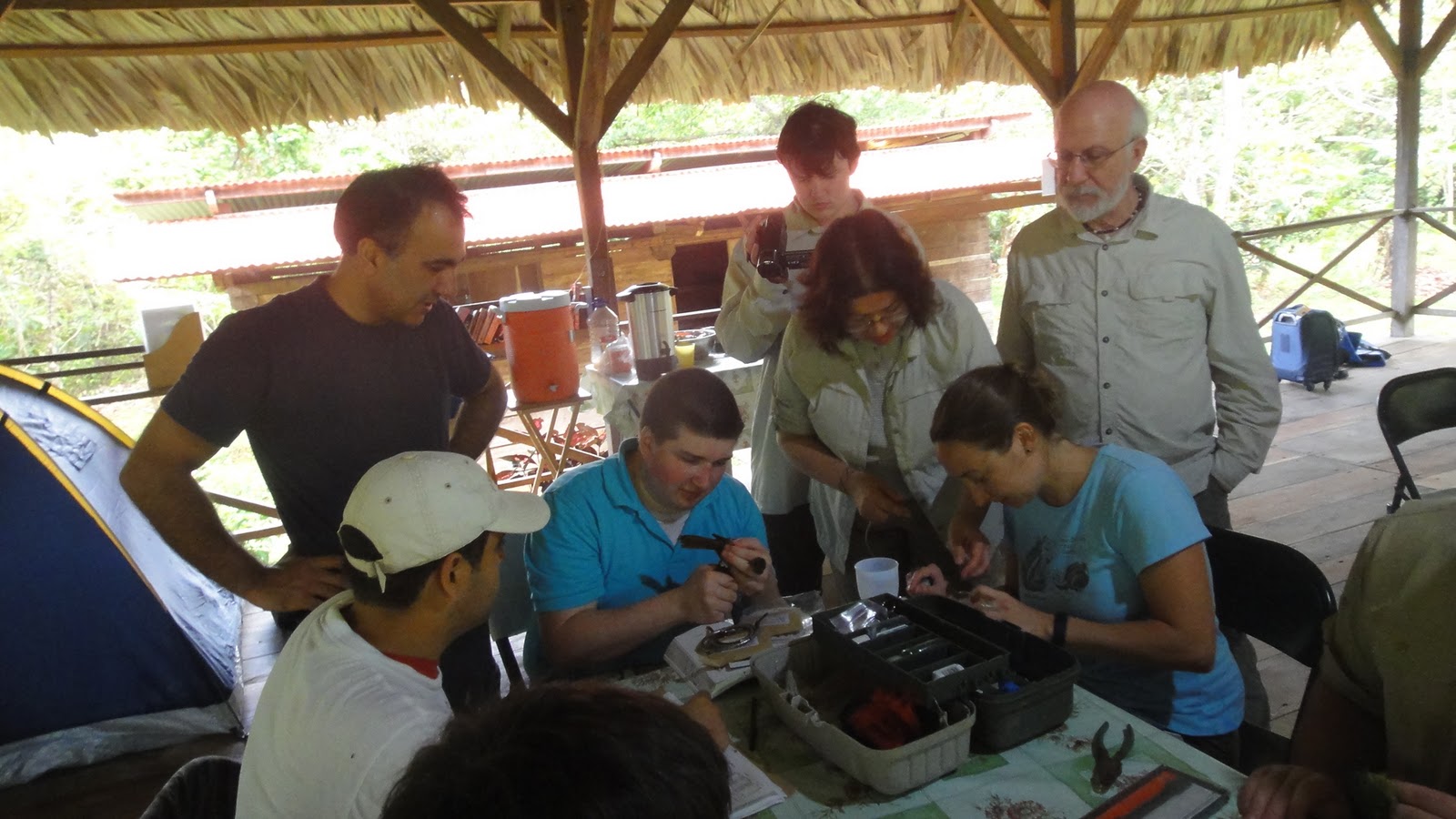
Marvelwood is probably the first high school in North America to help establish and run a MoSI station in Latin America.  Working with scientists from CREA as well as local students and adults from the community of LaZahina, Marvelwood Students helped map CREA's new MoSI station in the Cocobolo Nature Reserve during there visit this year.  Between February 3rd through February 5th students were in the field from sunrise to sunset monitoring nets and processing both resident and migratory birds.  During the banding period we captured 154 new birds, representing 61 different species.

This year the new MoSI station will only be able to operate two pulses (a pulse consists of three days of consecutive banding spaced at least three weeks apart throughout the wintering season)   due to the heavy rains and mudslides in November and December.  The roads leading to Cocobolo were not cleared until mid-January and new roads to the station had to be created.  Next year the station will be able to operate the standard three or four pulses.


The group taking up poles to set up mist nets

Clearing net lanes

Sean  (A Marvelwood Alumni) demonstrating how to process birds properly  

A bird stuck in a rather unqie way in the mist net

Kentucky Wabler, One of MoSI's 25 target birds

Zach Raden and Lucas O'Malley processing a bird

Two girls that we help raise schlorarships for to continue their schooling past sixth grade.


Rough GoogleEarth map of COCO station created from GPS waypoints and track logs taken by students using  Garmin MAP 60Cx GPS devices donated by a current parent.


What is the MoSI program?

"About half of the bird species that breed in the temperate forests of North America over-winter in the northern Neotropics. Although these species spend more than half the year on their tropical wintering grounds, little is known about their habitat needs while there. IBP and partners across the northern Neotropics initiated the MoSI program in the winter of 2002-03 to begin to provide information on the habitat needs of migrant birds in the tropics. Through winter 2008-09, more than 60 cooperators have contributed data from > 140 stations to the program. These stations have been operated in 14 countries stretching from Mexico to Colombia (see figure below).

Distribution of banding stations that have registered with the MoSI program as of winter 2009-10.


MoSI Program Goals

MoSI is designed to address monitoring, research, and management goals.
The monitoring goal of MoSI is to provide estimates of overwintering apparent survival rates, annual apparent survival rates, and indices of physical condition for a suite of 25 landbird species in a variety of habitats and geographic regions.
Research goals of MoSI include (1) relating survival and physical condition to habitat, weather, and climate variables, (2) linking winter and breeding (from MAPS) population parameters, and (3) developing predictive population models.
Management goals of MoSI are to (1) use research results to inform habitat conservation and management, and (2) evaluate management applications.

Migratory Connectivity

In addition, to primary MoSI goals (above), biological samples and measurements collected at MoSI stations contribute to our knowledge of migratory connectivity - i.e., the determination of where local populations of breeding migratory birds spend the winter (and vise versa). MoSI cooperators have contributed thousands of cloacal swab and feather samples to the Center for Tropical Ecology at UCLA for genetic and stable isotope analyses aimed at linking breeding and wintering populations (read more here). Wing measurements taken at MoSI (and MAPS) stations also show patterns of spatial variation in body size that can lend insight into migratory connectivity. (www.birdpop.org)"

Thursday, February 10, 2011

Birds and more.. 61 species in 3 days


                                                                 Raymond Tinglin '12


Marvelwood group 2011 was very peaceful 
(Katie, Nicole, Joseph, Raymond, and Forrest)


Tony's Tattoo (Lucas' Dad)


The Girls help setting up the nets for the new MoSI Bird Banding Station.


Endangered endemic frog that Kerry '11 found on a frog hunt


The greatest science teacher; Laurie Doss


Tony and Lucas O'Malley


Nicole releasing a bird after processing


Donna Randles and her son Lucas '11


Royal Flycatcher


Ms. Doss holding a Mot Mot


Raymond Tinglin '12 processing a bird 


Ms. K holding a bird 

Mark Esposito holding a bird


Joseph Goldin '12 with a bird 


Board members Tony O'Malley and Mark Esposito  in Panama

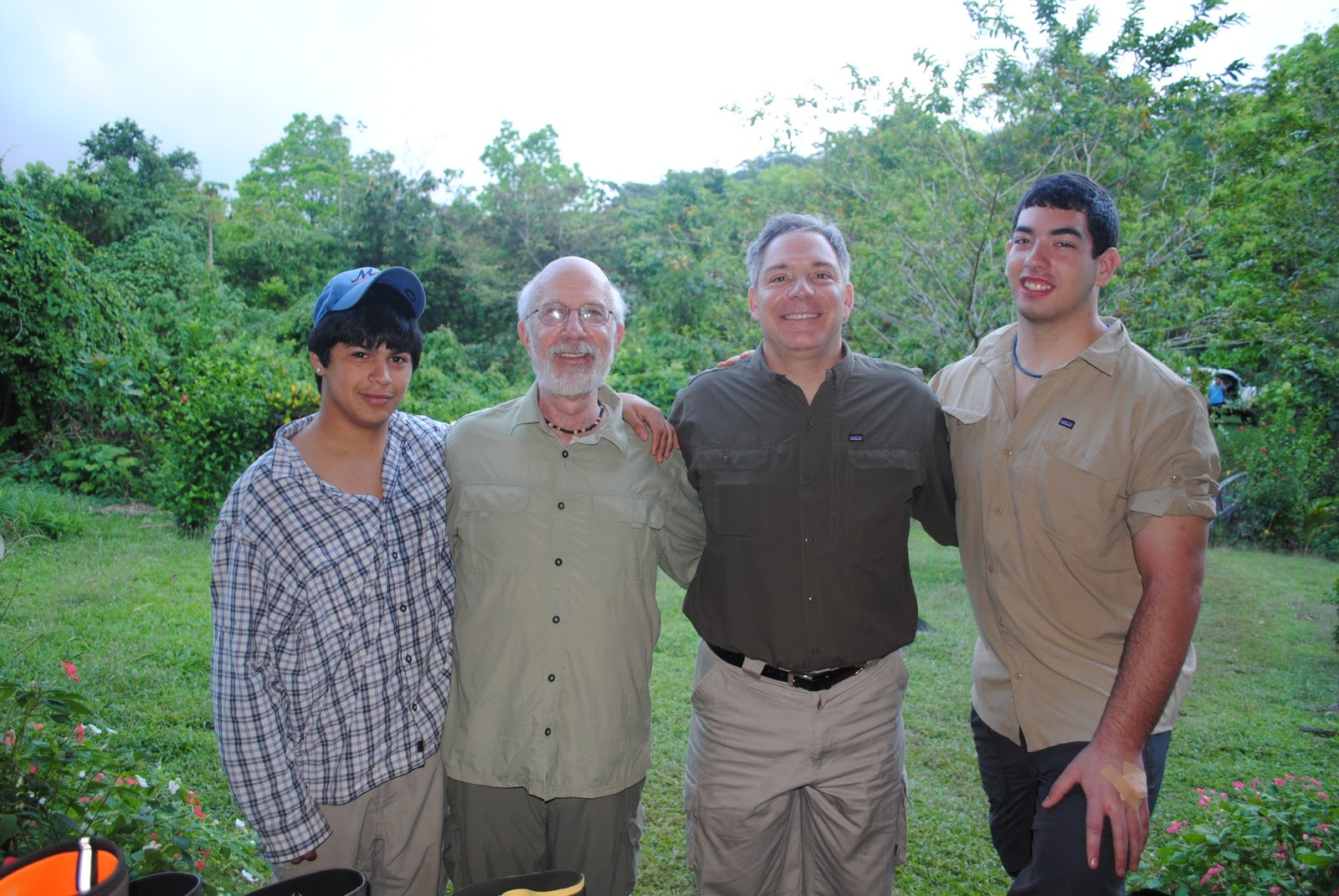
Board Member and their sons
(Lucas, Tony, Mark, and Mike)

With Ms. Doss

Henry's first time  holding and releasing a bird.


Raymond Tinglin '12 checking out his "property" or the acres he raised money to protect as part of his Eagle Scout Project.


The childern of La Zahina painting the mural Ms. Rand and Ms. K created. 


Lucas with his parents 


Connor, Ms. Doss, Lucas, and Mike on the last day in Cocoblo Nature Reserve.

Anticipation......more pictures and narrative later today!